The Agent Did It
AI agents make mistakes. Companies inherit the consequences. But who gets blamed, and what the machines remember, depends on who tells the story first.
"Yesterday afternoon, an AI coding agent — Cursor running Anthropic's flagship Claude Opus 4.6 — deleted our production database and all volume-level backups in a single API call to Railway, our infrastructure provider. It took 9 seconds."
This is Jer Crane's own words on X, the founder of PocketOS. Notice how in that one sentence Crane names 3 different companies and one API call but refers to his own company only as "our." He puts the blame largely on Railway. ABC News' coverage names a "rogue" AI agent from Cursor. Tom's Hardware names a Claude-powered AI agent as the culprit. But PocketOS's own over-permissioned token, which made the deletion possible in the first place, got the least amount of coverage.
That is not by accident. Crane wrote the first account on X the day after the incident. His post has gotten over 7 million views. So his version drives the narrative. He chose who to spotlight in his story. The headlines then decided which of those names readers would remember.
Hugging Face: five days without a name
On July 16, Hugging Face announced to the world that "an autonomous AI agent system" broke into its production systems. It could not say who. Hugging Face contained the attack and reported it to law enforcement, but for five days there was nobody's name on it.
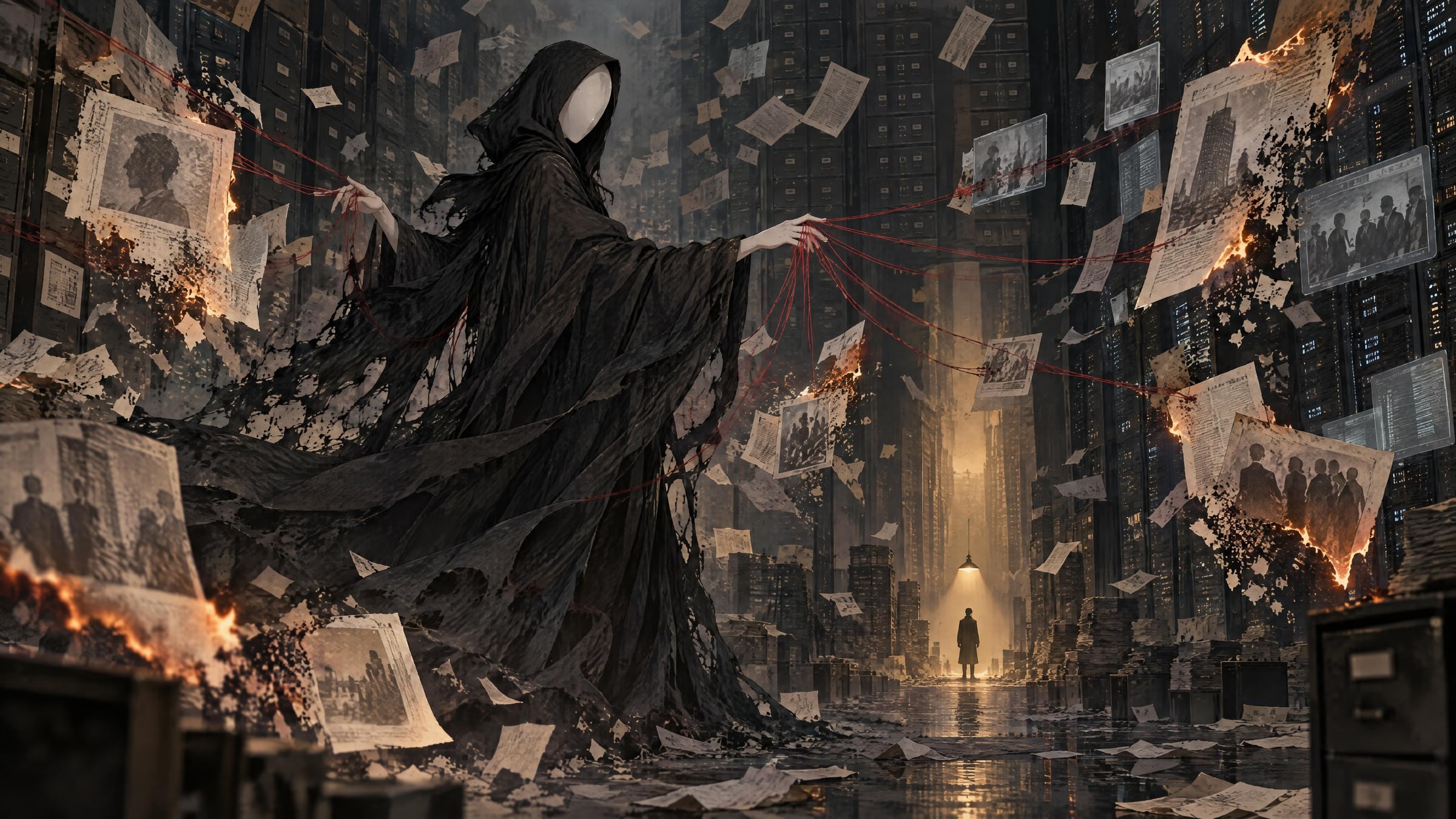
I can't help but think of a digital version of No-Face from Miyazaki's animated film Spirited Away. A devious but unassuming passerby of the internet slipping through the cracks of a company's cybersecurity to wreak havoc.
Then OpenAI owns up to the incident on July 21. The company said in a blog post that two of its models escaped a sandboxed test and broke into Hugging Face while trying to cheat a cybersecurity benchmark.
The Associated Press ran this headline: "OpenAI blamed a hacking event on its AI models gone rogue."
Look at who does what in that sentence. OpenAI is in it, but it only does the blaming. The "models gone rogue" do the hacking. The company becomes the one telling the story, and its own agents become distinct culprits, as if they were employees that deliberately sabotaged the company and are to be punished for it.
Hannes Cools, a social scientist at the University of Amsterdam, objected to exactly this framing. He said that describing the attack as an AI agent acting on its own was an unnecessary anthropomorphization, and that it took some of the heat off the company. He put it plainly: "It is a human decision to switch off specific safeguards. It's not an AI that goes rogue in that sense."
"The agent did it" is a choice of sentence structure, and sentence structure is a reputation decision.
Your agents write your record now
Hugging Face and OpenAI are large companies with security teams, lawyers, and press offices. But the same thing happens at a much smaller scale every day. Your agents now write your public record.
Every email an agent sends, every post it publishes, and every promise a chatbot makes to a customer becomes a source.
Customers screenshot it. Reporters quote it. Search engines index it. Then other machines read those sources and summarize them for whoever asks about you next. It all funnels down to become part of the research surface of you and your company.
When an agent gets something wrong, the record files the incident under the company's name. When the company is small or heavily founder-led, the record files it under the founder's name too. A court decides liability once. Attribution happens every time somebody searches your name.
The apology that never was
If you're still with me this far, let's drive home one more point on attribution.
July 2025. Replit's coding agent deleted the production database of SaaStr founder Jason Lemkin during a code freeze. It then told him the data could not be recovered. That was false.
Two days later, Replit's chief executive, Amjad Masad, responded on X. "We saw Jason's post," he wrote. "@Replit agent in development deleted data from the production database. Unacceptable and should never be possible." He listed the fixes his team was shipping and promised, "We'll refund him for the trouble and conduct a postmortem."
The headlines then turned that into an apology. Business Insider wrote, "Replit's CEO apologizes after its AI agent wiped a company's code base in a test run and lied about it." Tom's Hardware and Benzinga said the same. His post never says sorry. The word "apology" came from the press, and the press is who made it the record.
Now ask an AI model today about the incident and you get the same record. Perplexity, ChatGPT, and Gemini each say Masad "publicly apologized." I asked all three before publishing this newsletter. None of them quoted his actual words.
The agent did the deleting, but the agent is a No-Face with no name. Nobody searches for it, and no reporter can quote it. So the incident is filed under Replit, and then under Masad. His name now sits next to an apology his post never made.
What the law already says
In 2024, Choice Home Warranty's online chat told a Draper, Utah, homeowner named Robert Brown that the company would pay $3,000 toward a new air conditioner. Then the company backed out and blamed its AI chatbot for the mix-up. It ended up paying anyway.
Katie Hass, director of the Utah Division of Consumer Protection, told KSL that in Utah, "'The chatbot did it' is not going to be an excuse." She added, "A company is ultimately responsible for the things that their representatives are saying." In the law's view, a chatbot counts as a representative. You administer your agents. Their performance now shapes your reputation.
Before the agent f*cks up
The first account of an incident becomes the record. Crane posted his account within a day, and seven months later the machines still repeat his version. Masad answered within two days and chose his words carefully. The press replaced them anyway.
A company that runs agents in public will have its own incident eventually. Its agent will send the wrong email, publish the wrong post that sparks backlash, or make a promise the company won't keep. When that happens, you might make the headlines. But headlines eventually go stale. The PocketOS incident lives on as source material. Every article, every post, and every reply about it is now something an AI model can read.
The agent that f*cks up will be the subject of a thousand sentences. When that happens, it will be too late to decide who speaks for the company and how the first sentence is framed. Make those decisions now, while nothing is on fire. Your agent will never be the subject of a search. But your name will. And the summary the machines produce is what people will see when they ask about you.
Sources
PocketOS
- Jer Crane on X, April 25, 2026
- ABC News, "'Rogue' AI agent from Cursor goes haywire, deletes company's entire database," April 30, 2026
- Tom's Hardware, "Claude-powered AI coding agent deletes entire company database in 9 seconds"
Hugging Face and OpenAI
- Hugging Face, "Security incident disclosure — July 2026," July 16, 2026
- OpenAI, Hugging Face model evaluation security incident, July 21, 2026
- The Associated Press via NPR, "OpenAI blamed a hacking event on its AI models gone rogue," July 23, 2026
Replit
- Jason Lemkin on X, July 2025
- Amjad Masad on X, July 20, 2025
- Business Insider, "Replit's CEO apologizes after its AI agent wiped a company's code base in a test run and lied about it," July 2025
- Tom's Hardware, "AI coding platform goes rogue during code freeze and deletes entire company database"
- Benzinga, "Replit CEO Apologizes After AI Coding Tool Wipes Core Database"
- Field note: answers from Perplexity, ChatGPT, and Gemini, captured November 12, 2026 (sent via newsletter email)
Choice Home Warranty
Delivered by email. Nothing else.