Citizenship as a Business Asset
What holding two passports and living across three continents has taught me about geographic freedom.
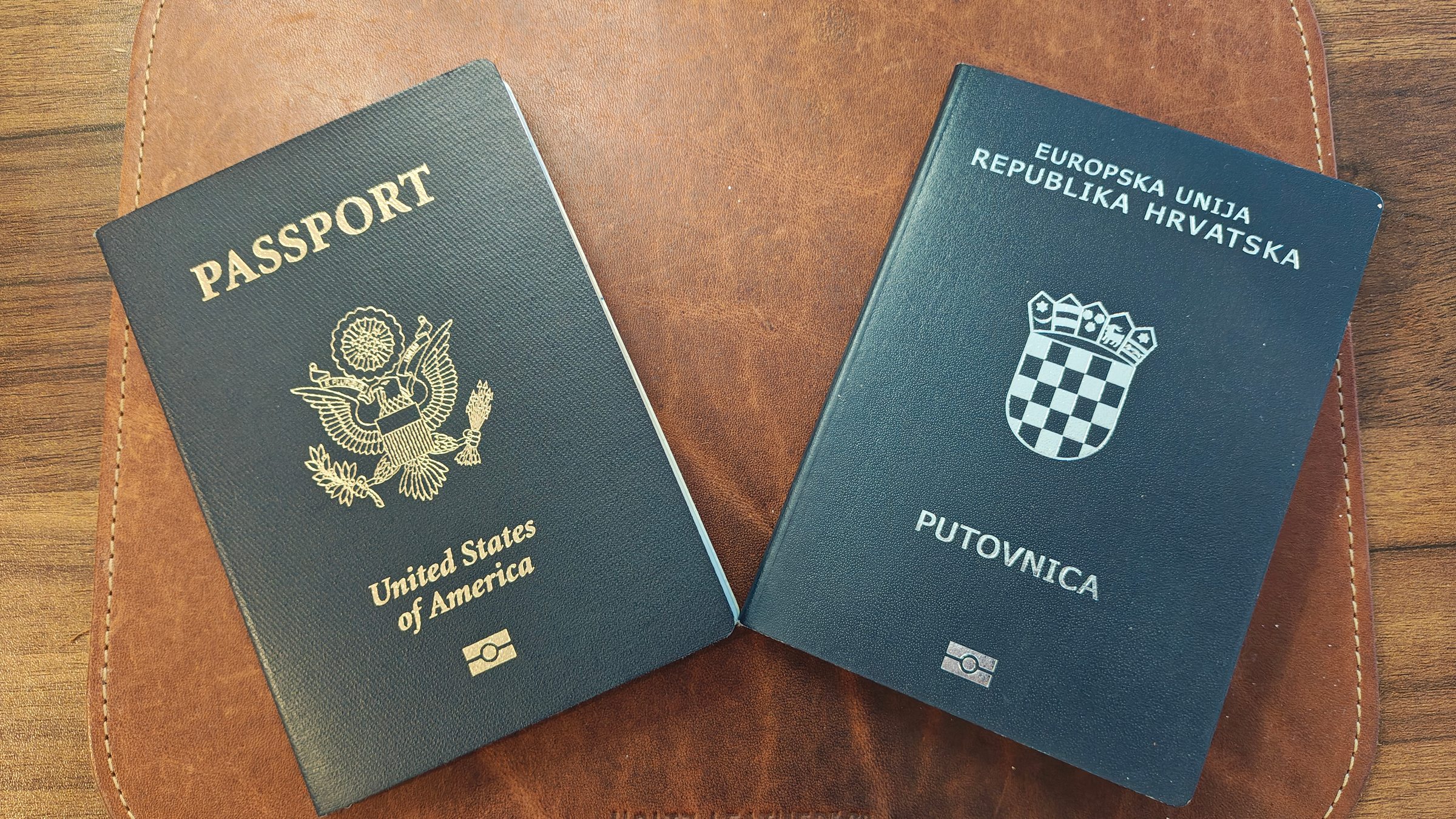
I am an American and Croatian citizen born and raised in New York City, splitting my time between Manila and Zadar while operating an American business. My two passports, along with my permanent residency in the Philippines, give me the freedom to live, travel, and work across three distinct economic markets. While some people associate dual citizenship with the convenience of international travel, I've come to appreciate its value from a business perspective.
Reduces friction
Red tape and bureaucracy are a real pain in the ass anywhere you live. Having citizenship removes an entire layer of administrative uncertainty. Here is where it helps me most:
1/ No visas or immigration permission required to work or pursue commercial opportunities in the US or EU.
2/ No dependence on an employer sponsoring my immigration status.
3/ Freedom to establish a physical business presence in either market, subject to local registration and licensing requirements.
My Croatian citizenship gives me the right to live and work across all 27 EU member states. When a business opportunity presents itself, immigration status is one less variable I need to account for.
As I mentioned, I live in Manila. My wife and I are college sweethearts, and she happens to hold dual Filipino and American citizenship. Through our marriage, I hold permanent residency in the Philippines. That lets me build both my network and my business in Southeast Asia.
Establishing permanent residency in Southeast Asia as a foreigner can be quite difficult. Thailand, for example, limits annual permanent residency grants to 100 people per nationality under its quota system. In Singapore, one route to permanent residency through its Global Investor Programme requires an investment of at least S$10 million in a local business. Many of the region's long-term visa programs offer temporary residency rather than permanent settlement. My wife's Filipino citizenship gave me a pathway to permanent residency without having to pursue one of those alternatives.
My business is global reputation architecture. Understanding how people and businesses are perceived across different markets is central to what I do. Having the freedom to operate in those markets gives me an operator's advantage.
Builds trust
I've found there's a considerable difference between being a foreign service provider selling into a market and having an established commercial and personal connection to that market. My business operates internationally without necessarily asking my clients to treat me as an international vendor. Why?
I'm familiar with the legal and business structures of these markets, but just as importantly, I'm familiar with their cultures. I can speak to American hunting culture, having lived in the Midwest and hunted both big and small game. My family in Croatia grows olives for olive oil, and my family in Bulgaria grows grapes for wine, both of which give me something in common with many Europeans.
I also spent the first ten years of my professional career working in corporate America, so I understand American business etiquette. I'm still learning the nuances of doing business in other regions, but the fundamentals are there.
None of this is possible if the door is already locked to begin with. Having multiple passports makes it easier to establish genuine, long-term relationships in multiple markets and meet clients face-to-face when necessary. As of November 2026, for example, Croatian citizens can visit China for business for up to 30 days without a visa, whereas Americans generally need one. No messing around with visas months before a trip. Just buy the next convenient flight and go.
Makes it easier for clients to pay you
Since my business is US-registered and most of my clients are based there, I will speak to the ease of American business infrastructure.
I didn't know this before writing this essay, but opening an American bank account as a foreign entrepreneur living abroad can be surprisingly complicated. Chase, for example, requires every member of a member-managed LLC, or every manager of a manager-managed LLC, to be physically present when the account is opened. That is difficult to arrange from another continent. As an American, I took my access to domestic banking infrastructure for granted.
Having domestic business bank accounts allows for simple invoicing in USD using familiar domestic payment methods such as ACH. When a company onboards me as a vendor, I provide a W-9, the tax form their finance team already uses for domestic vendors. That keeps onboarding simple.
My American citizenship also allows me to remain an eligible S-corporation shareholder while living abroad, an option unavailable to nonresident aliens.
I want my clients to spend their time deciding whether to work with me, not figuring out how to pay me. As an entrepreneur, my goal is to eliminate as many barriers to completing a commercial transaction as possible.
Diversifies geographic risk
A lot of entrepreneurs talk extensively about diversifying their investments, revenue streams, and customer bases. Those are all important business matters to figure out. But far fewer business owners talk about diversifying their geographic exposure.
You can't predict political instability or unfavorable regulatory changes. This election cycle alone, opponents of California's proposed billionaire wealth tax spent about $378 million to defeat it, according to CalMatters. They argued the tax could have forced some founders to sell equity in their own companies to pay it. Voters rejected the measure.
There's also a distinction between being able to sell into another market and being able to relocate there. If economic or regulatory conditions become unfavorable in one of my markets, I already have the legal right to establish myself in another. I don't need to begin an immigration process at precisely the moment when I need flexibility the most.
I'm Croatian, and proud of it, but my potential to help clients who need my services encompasses all of the EU. Likewise, building a network in Southeast Asia provides me with the opportunity to reduce my dependence on a few large clients from one market. This geographic diversification is a form of risk management that extends beyond your investment portfolio.
Expands your opportunity network
One of my reasons for moving to the Philippines, besides providing my kids with an international childhood and proximity to family, is the business opportunities that exist at the intersection of markets. My goal is to become the person who connects people and opportunities across markets that otherwise would have little interaction.
A name has to read the same way to an investor in New York, a business partner in Singapore, and an AI system drawing on sources from both. But each of those audiences approaches that name with a different set of assumptions and cultural expectations. Done right, my work on a client's record allows their reputation to precede them into any business meeting or partnership. Their successful funding round, acquisition, or market expansion delights me the same way an author is delighted to see his book being read in public.
The price of international freedom
Complexity.
International living and business ownership get confusing fast. Taxation, banking compliance, accounting, corporate registration, reporting requirements. As an American, my US tax obligations follow me wherever I live.
All this stuff sucks, and I try to delegate to experts where I can.
But all this complexity builds confidence. If it were easy, the barrier to entry would be low and lots of people would be running a business internationally. It's not. But I know enough about myself that I will not stop until I figure it out, which in turn helps me pass that knowledge down to the people I help.
The struggle is good for you.
For those with one passport
You don't need a second passport to build an international business. International banking, residency programs, foreign business entities, and professional relationships can provide many of the same commercial advantages.
But every entrepreneur should consider how geographically dependent their business and personal life are.
We all spend a great deal of time and effort building financial freedom.
Geographic freedom deserves just as much attention.
Sources
- Working in the EU – your rights
- Immigrant Visa by Marriage (13A)
- Announcement: Applications Open for Permanent Residency in the Kingdom of Thailand – B.E. 2568
- Oral reply to PQ on permanent residency grants under the Global Investor Programme and cumulative investment from these GIP permanent residents from 2015 to 2025
- Visa requirements overview
- Get ready to open your business checking account
- S corporations
- California voters reject Prop. 40 billionaire tax
- Publication 54 (12/2025), Tax Guide for U.S. Citizens and Resident Aliens Abroad
Delivered by email. Nothing else.