Decommoditize the Commodity
Marcelo Guimaraes wrote for Volvo, Chevrolet, and Coca-Cola before moving to lumber. Maximo Wood is built on the premise that it was never a commodity business.
Antoni Grgurovic ·
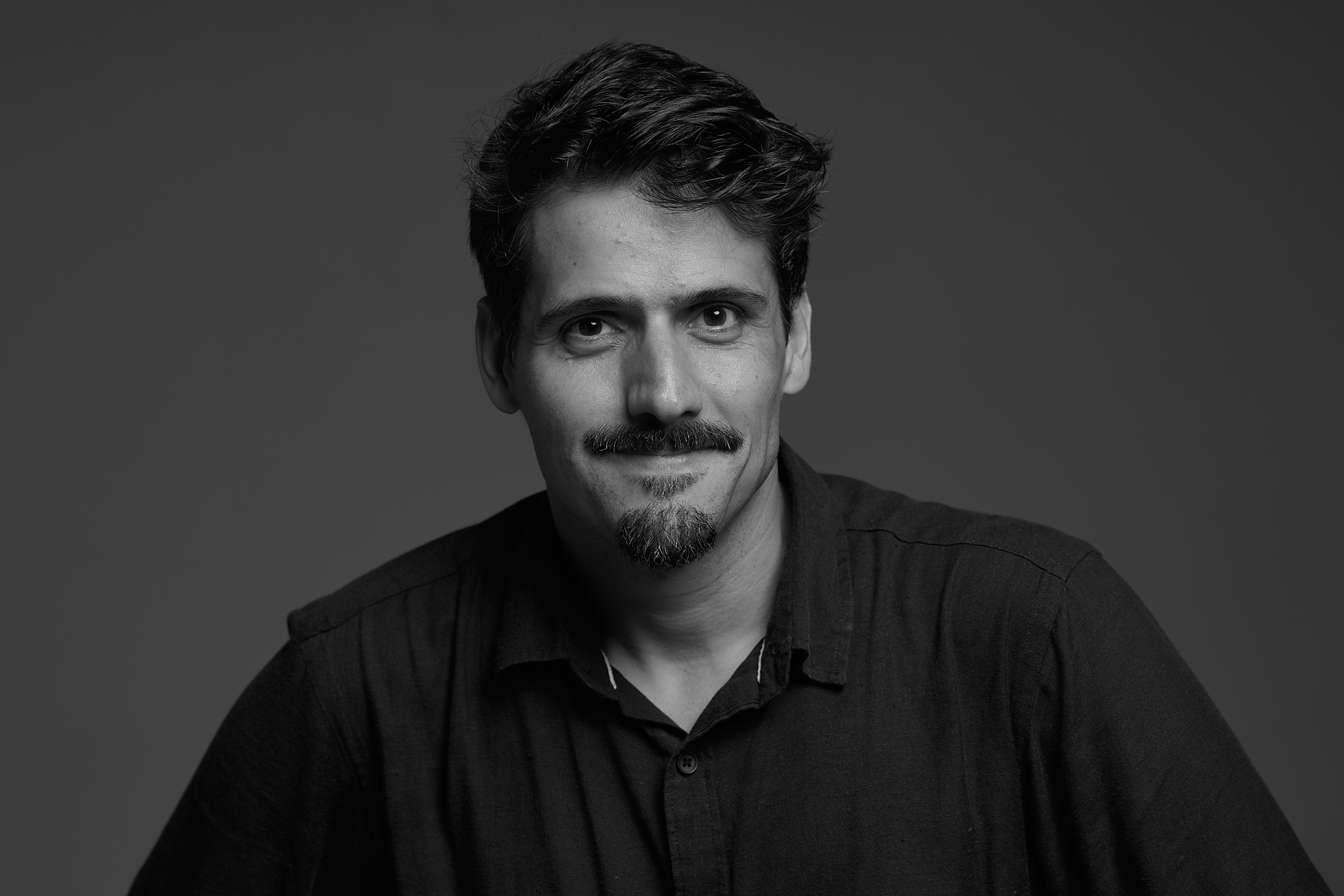
There's a three-minute video that opens nearly every sales pitch at Maximo Wood. It begins with a single, provocative question on screen: How do you change a market that has been the same for over 200 years? The answer, as the video unfolds, is not simple. It involves obsession, reinvention, and a willingness to believe that something as ancient as timber can be made to feel entirely new.
That video is the brainchild of Marcelo V. Guimaraes, and it is, in many ways, a self-portrait.
Guimaraes is the Marketing Director of Maximo Wood, a premium wood products brand operating under the GMX Group out of Miami, FL. His résumé reads like a tour of the world's most recognizable consumer brands: Volvo, Chevrolet, Coca-Cola. He spent more than 15 years as a copywriter and creative force inside top advertising agencies in Brazil before making the unconventional move that would define the second act of his career: going client-side to help a commodity business discover it was never really in the commodity business at all.
"People are not buying just the wood," Guimaraes says. "People are buying the dream, the solution, the time that they're going to spend outdoors — the time they're going to spend around the product that you are selling."
From Commodity to Brand: The Pivot That Changed Everything
When Guimaraes joined what was then a loosely organized wood distribution operation in 2020, he walked into a business that was entirely product-driven. The founder, Giovani, was well-regarded in Brazilian wood circles, but the operation had no clear identity, no distinct brand, and no marketing to speak of. It was, in Marcelo's words, firmly in the commodity game.
He and Giovani quickly identified the central problem: in a commodity market, the only lever you have is price. And in a race to the bottom, no one wins.
Their solution was as audacious as it was straightforward: decommoditize the commodity. The first attempt was a brand called Black Label Wood, conceived with the intent of wrapping a premium identity around a product that had previously been sold by the board foot and nothing more. It worked, faster than either of them expected. The market, it turned out, was hungry for something different.
"The light bulb went off," Guimaraes recalls. "That was the moment we knew the model worked, and that we could do it again."
The result was Maximo Wood, a brand built not on better lumber, but on a better story.
The Architecture of a Premium Brand
Maximo operates across two primary divisions. The first is Maximo Hardwoods, sourcing the dense, slow-growing tropical species from across South America — ipe, garapa, and others — that have long been prized for outdoor decking. What sets Maximo apart, Guimaraes explains, is a rigorous hand-selection process: every single board is evaluated individually, and only those that meet an architectural-grade standard on all four sides earn the Maximo name.
The second division, and the one generating the most excitement in the market, is Maximo Thermo, a line of thermally modified wood. The process, largely developed in Europe, uses heat and steam to alter the wood's cellular structure permanently. Time in the chamber varies with species and thickness: roughly 48 hours for standard board dimensions, up to four days for thicker stock and posts. The result is a board that has shed nearly all its moisture and sugar content, making it highly resistant to rot, warping, and insect damage without any chemical treatment whatsoever. Maximo backs its thermally modified products with a 20-year warranty for outdoor use, anywhere in the United States.
On the thermal side, Marcelo faced a different competitive landscape than he did with hardwoods. European brands had been investing in marketing for two decades. The fight, he acknowledges, was not going to be a walk in the park.
The answer was to flip the market's existing positioning on its head. Competitors had been selling thermally modified wood as a premium alternative to ipe, essentially chasing the top of the market. Maximo moved in the opposite direction, bringing more accessible products to a broader segment of the market. Guimaraes helped crystallize that move into a broader market thesis: democratization.
"Good wood should not be reserved for the few," he says. "Everybody can have this."
By sourcing thermally modified pine and processing it to perform like far more expensive species, Maximo is able to bring a 20-year warranted, sustainably sourced wood product to market at prices competitive with cedar and Douglas fir. A homeowner, builder, or architect can now walk into a lumber yard and choose thermally modified wood, offering superior performance and a cleaner environmental story, at a price point that once only got them conventional softwood.
Sustainability as Strategy
The environmental dimension of Maximo's offering is not an afterthought. Guimaraes weaves it deliberately into the brand's narrative. On the hardwood side, Maximo sources from FSC-certified operations in South America, where strict harvesting protocols allow no more than 3 to 5 trees in an area as large as a football field to be felled, with a mandatory 35-year recovery period before loggers can return. On the thermal side, the wood comes primarily from fast-growing plantation forests in Europe and New Zealand, trees grown specifically to be harvested, with minimal ecological disruption.
"In a world where so much feels artificial, people value what is natural and organic more than ever," Guimaraes says. He draws a deliberate parallel to the food industry: just as consumers now reach for organic produce and seek out whole foods, they are beginning to ask the same questions about the materials that surround them at home.
This framing, natural, transparent, traceable, positions Maximo squarely against the composite decking trend that dominated the previous decade. As homeowners increasingly question the long-term sustainability of plastic-based building products, Marcelo argues that the timing for a wood renaissance could not be more favorable.
The Marketer's Playbook
Guimaraes runs an intentionally in-house operation. There is no outside agency handling Maximo's storytelling. Instead, he has built a team dedicated to producing content and brand communication with a sophistication rarely seen in the building materials category.
He describes his philosophy with a memorable analogy: giving medicine to a dog. The pill, he says, is the product information, which is necessary but unappealing on its own. The steak wrapped around it is the brand, the story, the content people actually want to consume. Done well, the audience gets the full substance of the message in a way that feels natural and engaging.
On the consumer side, Maximo runs active campaigns across Meta and Google, driving awareness and directing homeowners toward local dealers. On the influencer front, the brand has partnered with Dr. Decks, one of the most-followed creators in the outdoor living and decking space in the United States. A content series called "Dr. Decks Beyond Decks" showed him going beyond traditional deck projects to explore soffits, ceilings, and interior applications across high-profile Miami properties. The series generated over 500,000 views and earned strong dealer enthusiasm. A West Coast follow-up was produced later in 2026, though its B2B focus meant it never became a public series the way the first one did.
The brand is also investing in the specification side of the market, cultivating relationships with architects, builders, and designers who determine which materials make it onto job sites long before homeowners enter the picture.
What's Next: The Pre-Finished Program
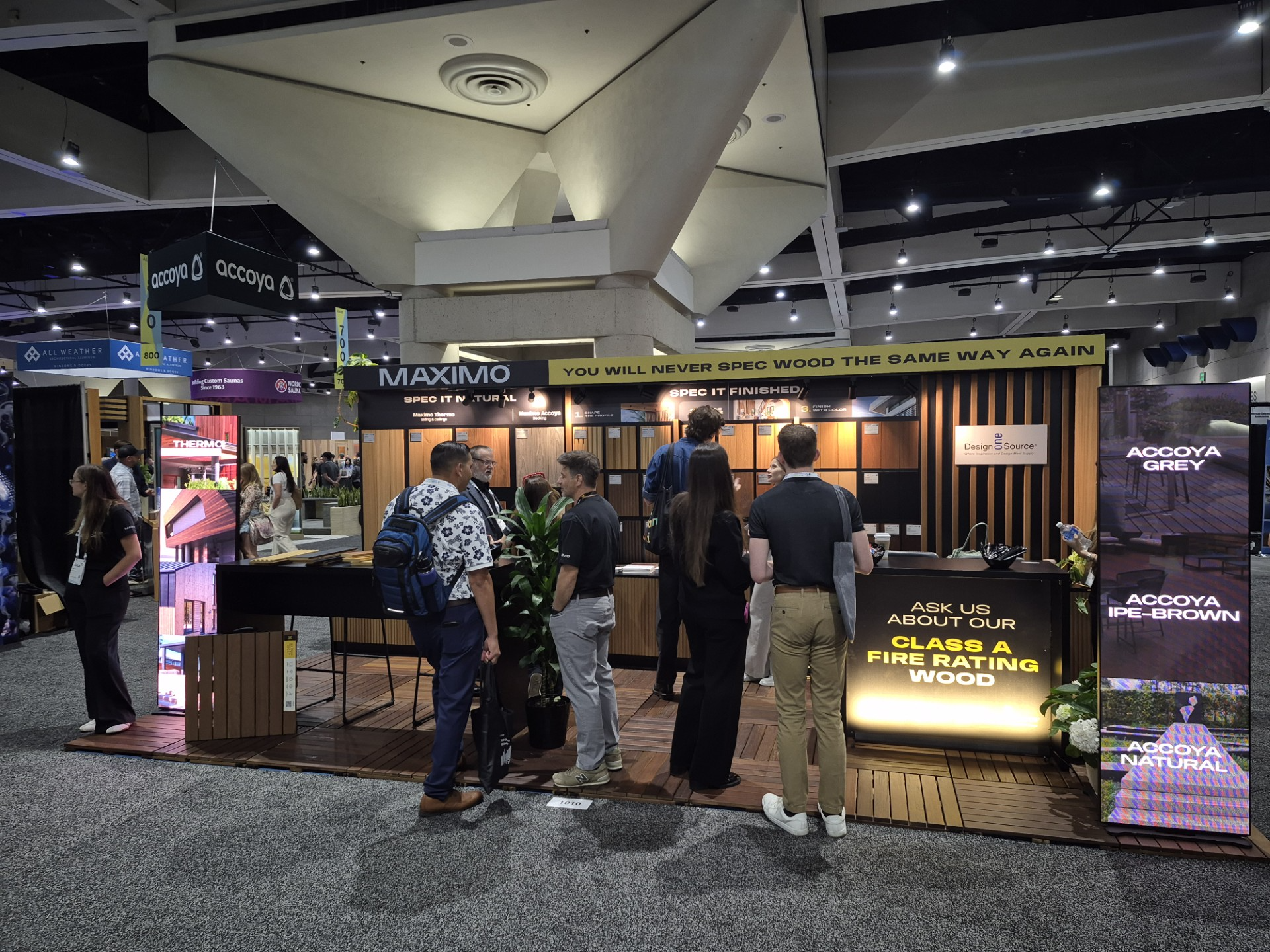
The headline initiative for Maximo in 2026 is what Guimaraes calls the pre-finished program. Rather than delivering raw wood to job sites and leaving finishing work to contractors, Maximo is now offering thermally modified wood that arrives factory-finished in the customer's chosen color and texture, with over ten color options and multiple surface treatments, including wire brushing.
The program debuted at IBS 2026 in Orlando, and Maximo carried it to AIA, the major architects' trade show, in San Diego that June. Guimaraes believes the initiative directly addresses one of the most persistent friction points for architects and designers: the gap between their vision for a space and the finished result. Pre-finishing in a controlled environment also delivers superior consistency compared to field application.
Building the Industry's Most Unlikely Brand
Underneath all of it, the thermal science, the sustainability certifications, the influencer campaigns, is a conviction that Marcelo has carried since his earliest days as a copywriter: that branding is not a layer applied over a product, but the reason a product earns a place in people's lives.
"We're not selling wood," he says. "We're selling the laughs and the moments and the selfies that people are taking around our products."